How Reflective Commercial Roof Coatings Help Los Angeles Buildings Stay Cooler
Commercial roofs in Los Angeles spend long hours under strong sunlight. Dark roof surfaces absorb heat, which raises roof temperatures and adds stress to the roofing materials below. A solar reflective roof coating can reduce this heat load on offices, stores, warehouses, and apartment buildings.
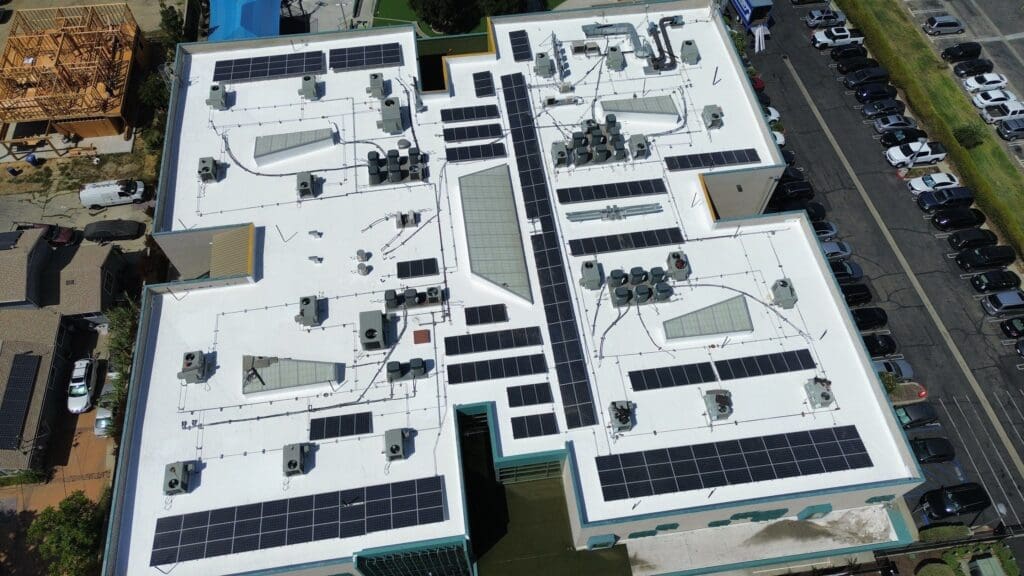
Reflective commercial roof coatings create a light-colored protective surface over a suitable existing roof. A white roof coating or another rated reflective finish can reflect more sunlight and release absorbed heat more effectively than many dark surfaces. When the roof is still stable, a coating can improve performance without a complete tear-off.
What Is a Reflective Commercial Roof Coating?
A roof coating is a fluid-applied material that cures into a continuous protective layer. It can be rolled or sprayed over certain low-slope roofing systems after cleaning and repairs. The coating covers many seams and surface details, helping protect the existing membrane from weather and ultraviolet exposure.
Reflectivity is a performance feature, not one specific product. Acrylic, silicone, and some polyurethane systems can provide reflective finishes. The best material depends on the existing roof, drainage, traffic, climate, and manufacturer requirements.
Acrylic coatings often suit sunny, dry conditions and roofs with positive drainage. Silicone coatings provide strong ultraviolet resistance and may perform better where occasional ponding occurs. Polyurethane coatings can add toughness in traffic areas. Product compatibility should always be confirmed before application.
Why Cool Roof Performance Matters in Los Angeles
Large low-slope roofs receive direct sunlight across most of their surface. A reflective finish can reduce heat absorption at the roof. This may lower surface temperatures and lessen heat-related stress on the membrane.
Energy results vary by building. Insulation, roof area, HVAC efficiency, indoor settings, and property use all affect savings. A coating should be selected for complete roof performance, not from color or energy claims alone.
Benefits of Reflective Roof Coatings
A properly installed coating system may offer several practical benefits:
- Lower roof surface temperatures during sunny weather
- Less ultraviolet exposure for the existing membrane
- A seamless layer over many seams and details
- Improved resistance to normal surface weathering
- Less disruption than a full roof replacement
- Possible extension of the roof’s useful service life
- A renewable surface that may be recoated later
A coating cannot correct major hidden damage. Rotted decking, saturated insulation, widespread membrane failure, and structural movement require proper repair or replacement.
Is the Existing Roof Suitable for Coating?
Every commercial roof restoration should begin with an inspection. The contractor should identify the current system, review seams and flashing, check drainage, and look for signs of trapped moisture. Moisture testing may be needed when leaks or wet insulation are suspected.
A roof may be a good candidate when it is firmly attached, stable, and repairable. Isolated cracks, open seams, punctures, and damaged flashing can often be corrected before coating. Widespread moisture or deck damage may make replacement the safer long-term option.
Preparation Determines Coating Performance
Good adhesion starts with a clean and sound surface. A professional project commonly includes:
- Inspection of the membrane, insulation, deck, and drainage
- Moisture testing in suspicious areas
- Removal of dirt, debris, oils, and loose materials
- Repair of cracks, seams, flashing, and penetrations
- Primer when required by the selected system
- Coating applied at the specified thickness
- A final inspection of coverage and repaired details
Skipping preparation can cause poor adhesion, bubbles, thin spots, and early failure. A reflective coating should never be used to hide an unresolved leak.
Coating or Full Roof Replacement?
Coating restores a roof that is weathered but still sound. Replacement addresses a roofing system that has failed or cannot support another restoration. Repeated leaks, wet insulation, damaged decking, or broad membrane failure may point toward replacement.
The lowest starting price is not always the best value. Owners should compare expected service life, repairs, maintenance, warranty terms, and business disruption before choosing.
Ask the contractor to explain the recommended system, required repairs, dry-film thickness, expected maintenance, and warranty conditions. The written proposal should also identify areas excluded from coating. Clear details make it easier to compare restoration with replacement on equal terms.
Contact USA Premier Roofing to schedule an inspection and learn whether a reflective coating can improve your roof’s protection and performance.
Posted in : commercial roof coating, commercial roofing, roof coating